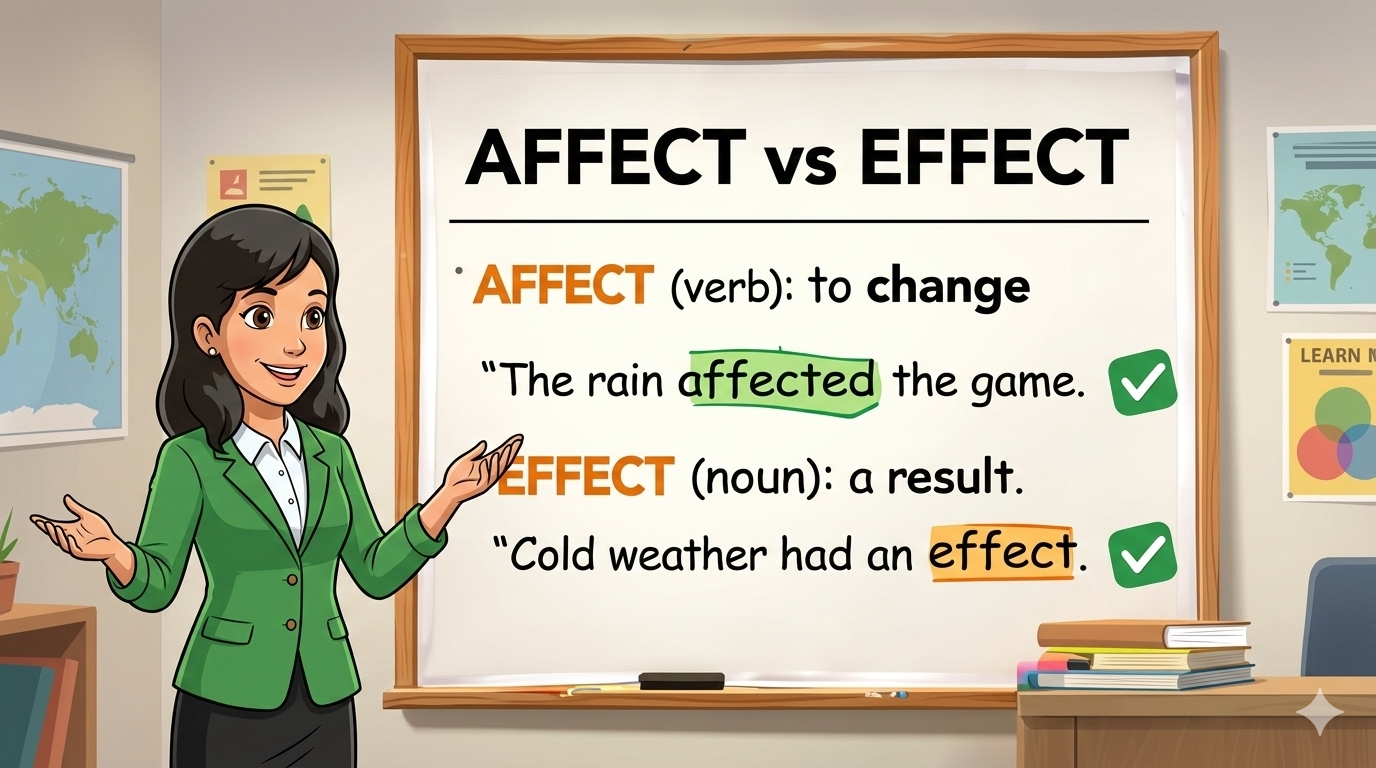
Many English learners often get confused between affect vs effect. These two words look similar and even sound similar, but they have different meanings and uses in sentences.
Understanding the difference between affect vs effect can improve your writing and help you avoid common English mistakes. In this guide, we will explain the meanings, examples, and simple tricks to remember the correct usage.
What Does Affect Mean?
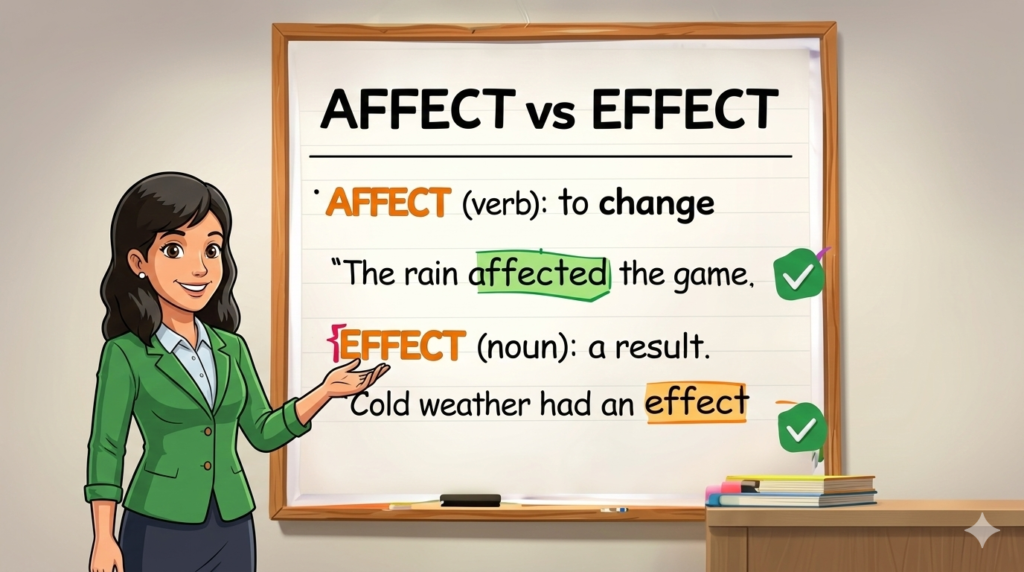
The word affect is usually used as a verb. It means to influence or change something.
In simple words, when something affects something else, it means it has an impact on it.
Examples of Affect
- Lack of sleep can affect your health.
- Social media can affect people’s opinions.
- Bad weather may affect travel plans.
In all these sentences, affect is used to show influence or impact.
What Does Effect Mean?
The word effect is usually used as a noun. It means a result or outcome of something.
Examples of Effect
- The new law had a positive effect on the economy.
- Exercise has a good effect on mental health.
- The medicine had a quick effect on the patient.
In these examples, effect refers to the result of an action.
Simple Trick to Remember Affect vs Effect
A very simple trick can help you remember the difference.
- Affect = Action (Verb)
- Effect = End Result (Noun)
So if the word describes an action, use affect.
If it describes a result, use effect.
Affect vs Effect Examples in Sentences
Here are some easy comparison examples:
- Stress can affect your sleep.
- The effect of stress can be serious health problems.
Another example:
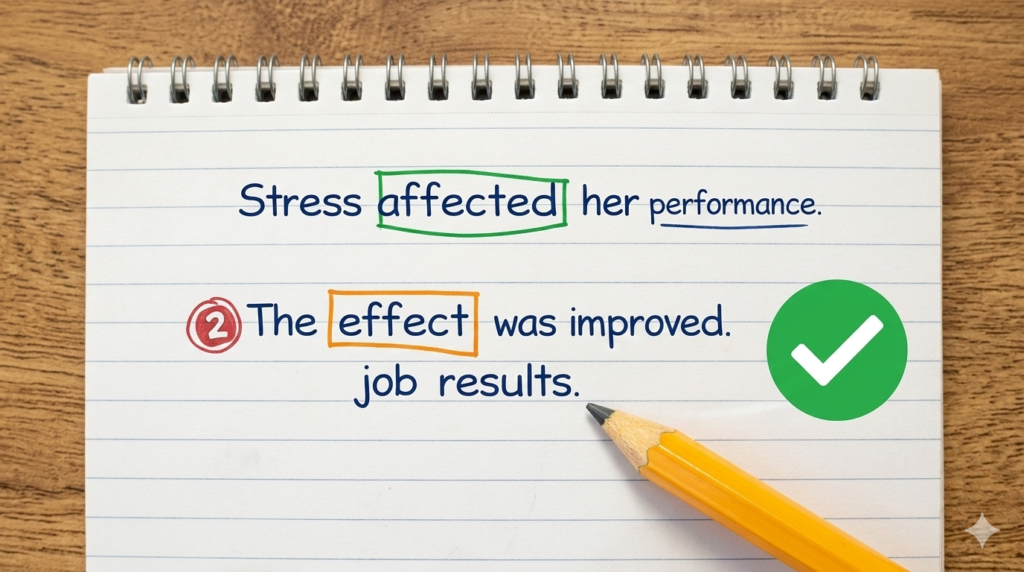
- The teacher’s advice affected the student.
- The effect was improved performance.
Common Mistakes People Make
Many people incorrectly use these words because they sound similar.
Incorrect sentence:
❌ The weather will effect my mood.
Correct sentence:
✅ The weather will affect my mood.
Another example:
❌ The new rule will affect many changes.
✅ The new rule will effect many changes. (rare usage meaning “bring about”)
Why Learning Affect vs Effect Is Important
Understanding the difference between affect vs effect helps you:
- Write more clearly
- Avoid grammar mistakes
- Improve your English communication
- Sound more professional in writing
These small grammar improvements can make a big difference in your English skills.
FAQ Section
Many English learners frequently confuse affect and effect because the words are similar in spelling and pronunciation. The following frequently asked questions can help clarify their correct usage.
Frequently Asked Questions (FAQ)
What is the difference between affect and effect?
Affect is usually a verb meaning to influence something, while effect is usually a noun meaning a result or outcome.
Is affect always a verb?
Most of the time, affect is used as a verb, but in psychology, it can sometimes be used as a noun.
Is effect always a noun?
Usually yes, but effect can also be used as a verb in formal English meaning “to bring about something”How can I remember affect vs effect easily?
Use this trick:
Affect = Action
Effect = End result
Why do people confuse affect and effect?
People confuse these words because they look and sound very similar.
Related Posts
You may also like these articles:
- 20 Common English Words People Always Spell Wrong
- Your vs You’re – Learn the Correct Usage
- Their vs There vs They’re – Easy Grammar Guide
- Then vs Than – One Small Word That Changes Meaning

William Henry is a writer for Grammar Max, a blog that focuses on synonyms and phrases. He loves exploring the quirks of the English language and enjoys helping readers improve their vocabulary. William’s articles are easy to read, fun, and full of useful tips for anyone looking to better understand and use English. Whether you’re a student, a professional, or just someone interested in language, William’s writing on Grammar Max makes learning about words and their meanings simple and enjoyable.