Learn the difference between fewer vs less with simple rules and examples. Avoid common English grammar mistakes and improve your writing skills easily.
Many English learners and even native speakers often confuse fewer and less. These two words are commonly used in daily English, but they follow a specific grammar rule that many people ignore.
Understanding the difference between fewer vs less will help you write more accurately and sound more professional. In this guide, you will learn the rules in a simple, clear way with examples.
What Does “Fewer” Mean?
The word fewer is used for countable nouns — things you can count individually.
👉 If you can count it (1, 2, 3…), use fewer.
Examples of Fewer
- I have fewer books than you.
- She made fewer mistakes this time.
- There are fewer students in the class today.
- We need fewer chairs.
👉 Books, mistakes, students, chairs → all can be counted.
What Does “Less” Mean?
The word less is used for uncountable nouns — things you cannot count individually.
👉 If you cannot count it, use less.
Examples of Less
- I have less time today.
- She drinks less water now.
- We need less sugar in this recipe.
- There is less traffic at night.
👉 Time, water, sugar, traffic → cannot be counted directly.
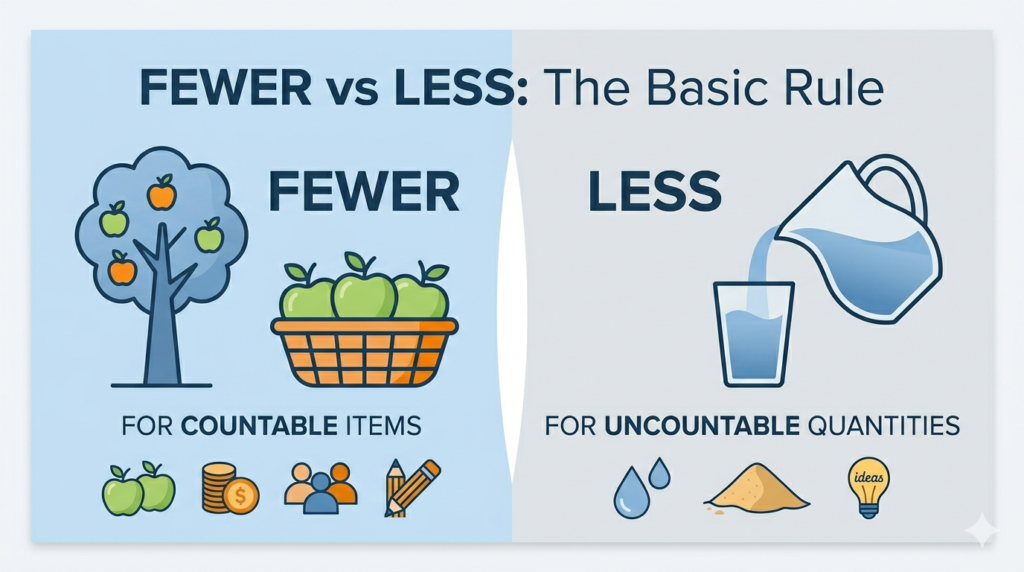
Key Difference Between Fewer and Less
| Word | Usage | Noun Type | Example |
|---|---|---|---|
| Fewer | Countable nouns | Things you can count | Fewer books |
| Less | Uncountable nouns | Things you cannot count | Less water |
Simple Trick to Remember
Here is an easy trick:
👉 Fewer = Count numbers
👉 Less = Cannot count
Example:
- Fewer apples ✔
- Less apples ❌
- Less water ✔
- Fewer water ❌
Common Mistakes People Make
❌ Incorrect:
There are less people in the room.
✅ Correct:
There are fewer people in the room.
Another example:
❌ Incorrect:
I need fewer sugar.
✅ Correct:
I need less sugar.
Exception to the Rule
Sometimes, less is used with numbers in real life, especially in informal English.
Example:
- “Less than 10 minutes” ✔
- “Less than 5 kilometers” ✔
Even though numbers are countable, less is commonly accepted in these cases.
Why This Grammar Rule Is Important
Learning fewer vs less helps you:
- Avoid common grammar mistakes
- Improve writing accuracy
- Sounds more professional
- Communicate clearly
This rule is especially important in formal writing, exams, and business communication.
Extra Writing Tip
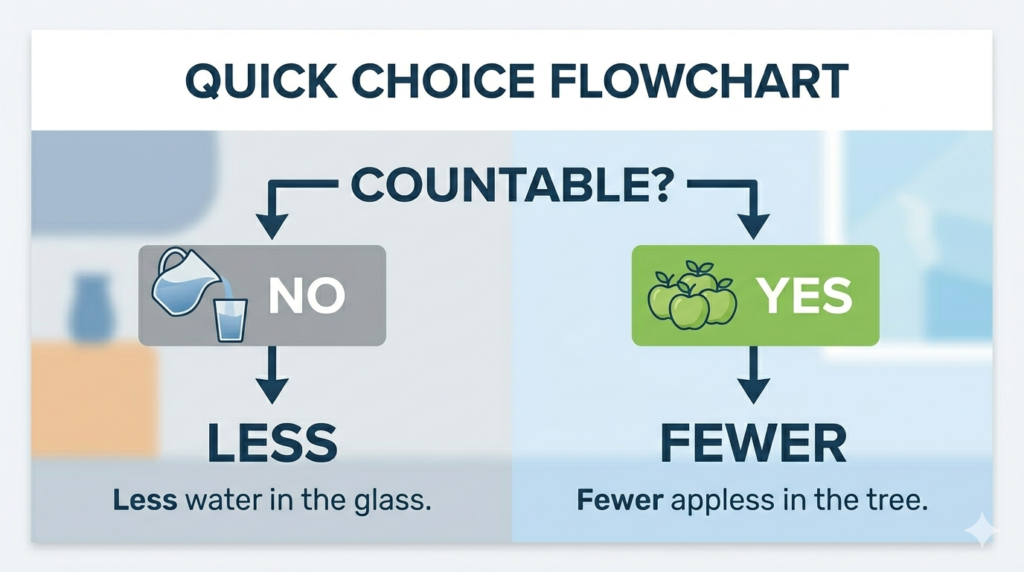
When you are writing, quickly ask yourself:
👉 Can I count this noun?
- Yes → use fewer
- No → use less
This simple habit will help you avoid mistakes instantly.
FAQ Section
Frequently Asked Questions
What is the difference between fewer and less?
Fewer is used for countable nouns, while less is used for uncountable nouns.
Can I say “less people”?
No, the correct form is fewer people.
Is “less than 10 minutes” correct?
Yes, it is commonly accepted in modern English.
How can I remember fewer vs less?
Use this rule:
Fewer = countable
Less = uncountable
Final Tip for Using Fewer and Less Correctly
To master fewer vs less, try practicing with real-life situations. When you write or speak, pause for a second and identify whether the noun is countable or uncountable. For example, items like books, cars, and people are easy to count, so you should use fewer. On the other hand, things like time, water, and money are not counted individually, so less is the correct choice. Reading English articles, blogs, and news can also help you notice how these words are used in real contexts. Over time, this practice will become a habit, and you will use fewer and less correctly without thinking too much, making your English more natural and professional.
Related Posts
- Its vs It’s – Simple Grammar Rule Most Writers Get Wrong
- Who vs Whom – The Easy Rule Anyone Can Understand
- Farther vs Further – Which Word Should You Use?
- Since vs For – The Correct Way to Talk About Time

William Henry is a writer for Grammar Max, a blog that focuses on synonyms and phrases. He loves exploring the quirks of the English language and enjoys helping readers improve their vocabulary. William’s articles are easy to read, fun, and full of useful tips for anyone looking to better understand and use English. Whether you’re a student, a professional, or just someone interested in language, William’s writing on Grammar Max makes learning about words and their meanings simple and enjoyable.