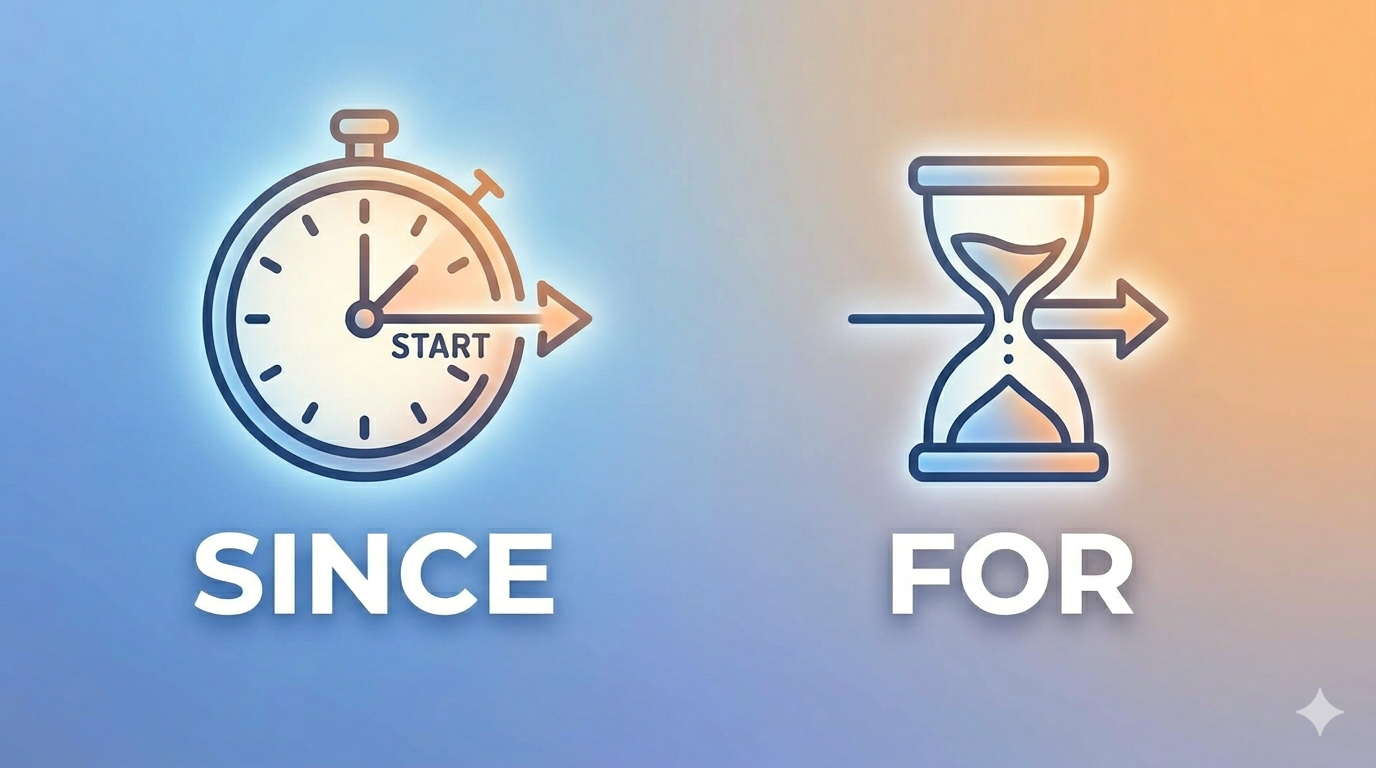
Learn the difference between since vs for with simple examples. Understand how to use time expressions correctly and improve your English grammar easily.
Many English learners get confused when using since and for while talking about time. These two words are very common in daily English, but they are used in different ways.
Understanding the difference between since vs for will help you speak and write English more clearly. In this guide, you will learn simple rules, examples, and easy tricks to master this grammar topic.
What Does “Since” Mean?
The word since is used to talk about a specific point in time when something started.
👉 It answers the question: When did it start?
Examples of Since
- I have lived here since 2020. Since vs For
- She has been working since morning.
- We have known each other since childhood.
- He has been studying since 8 AM.
👉 In all examples, since shows a starting point.
What Does “For” Mean?
The word for is used to talk about a duration of time.
👉 It answers the question: How long?
Examples of For
- I have lived here for 3 years.
- She has been working for 5 hours.
- We waited for a long time. Since vs For
- He studied for two hours.
👉 In all examples, for shows a time period.

Key Difference Between Since and For
| Word | Meaning | Use | Example |
|---|---|---|---|
| Since | Starting point | When something began | Since 2020 |
| For | Duration | How long | For 3 years |
Simple Trick to Remember
Here is an easy trick:
👉 Since = Start time
👉 For = Duration
Example:
- Since Monday → starting point
- For two days → duration
Common Mistakes People Make
❌ Incorrect:
I have been here since 5 hours.
✅ Correct:
I have been here for 5 hours. Since vs For
Another example:
❌ Incorrect:
She has been working for Monday.
✅ Correct:
She has been working since Monday.
When to Use Since and For Together
Sometimes both since and for can be used in the same sentence.
Example:
- I have been studying for 3 hours since morning.
This sentence shows both:
- Starting point (since morning)
- Duration (for 3 hours)

Why This Grammar Rule Is Important
Learning since vs for helps you:
- Speak more clearly about time
- Avoid common grammar mistakes
- Improve writing accuracy
- Sounds more natural in English
This rule is very important in the present perfect tense, which is widely used in English.
Extra Writing Tip
When writing or speaking, always ask yourself:
👉 Am I talking about when something started or how long it continued?
If it’s a starting point → use since
If it’s a duration → use for
This simple thinking will help you choose the correct word every time.
FAQ Section
Frequently Asked Questions
What is the difference between since and for?
Since shows a starting point, while for shows duration.
Can I use since with duration?
No. Since is used with a specific time, not duration. Since vs For
Is “for 2 hours” correct?
Yes. It shows duration, so for is correct.
Can since and for be used together?
Yes, in some sentences, to show both start time and duration.
Final Tip for Using Since and For Correctly
To master since vs for, practice using both words in real-life sentences. Try writing about your daily routine, such as how long you study or when you started a task. For example, “I have been learning English for two years” and “I have been practicing daily since 2022.” This kind of practice will help you understand the difference naturally. Over time, you will not need to think too much before choosing the correct word, and your English will sound more fluent and accurate. Since vs For
Related Posts
- Its vs It’s – Simple Grammar Rule Most Writers Get Wrong
- Who vs Whom – The Easy Rule Anyone Can Understand
- Farther vs Further – Which Word Should You Use?
- Fewer vs Less – Grammar Rule Explained

William Henry is a writer for Grammar Max, a blog that focuses on synonyms and phrases. He loves exploring the quirks of the English language and enjoys helping readers improve their vocabulary. William’s articles are easy to read, fun, and full of useful tips for anyone looking to better understand and use English. Whether you’re a student, a professional, or just someone interested in language, William’s writing on Grammar Max makes learning about words and their meanings simple and enjoyable.