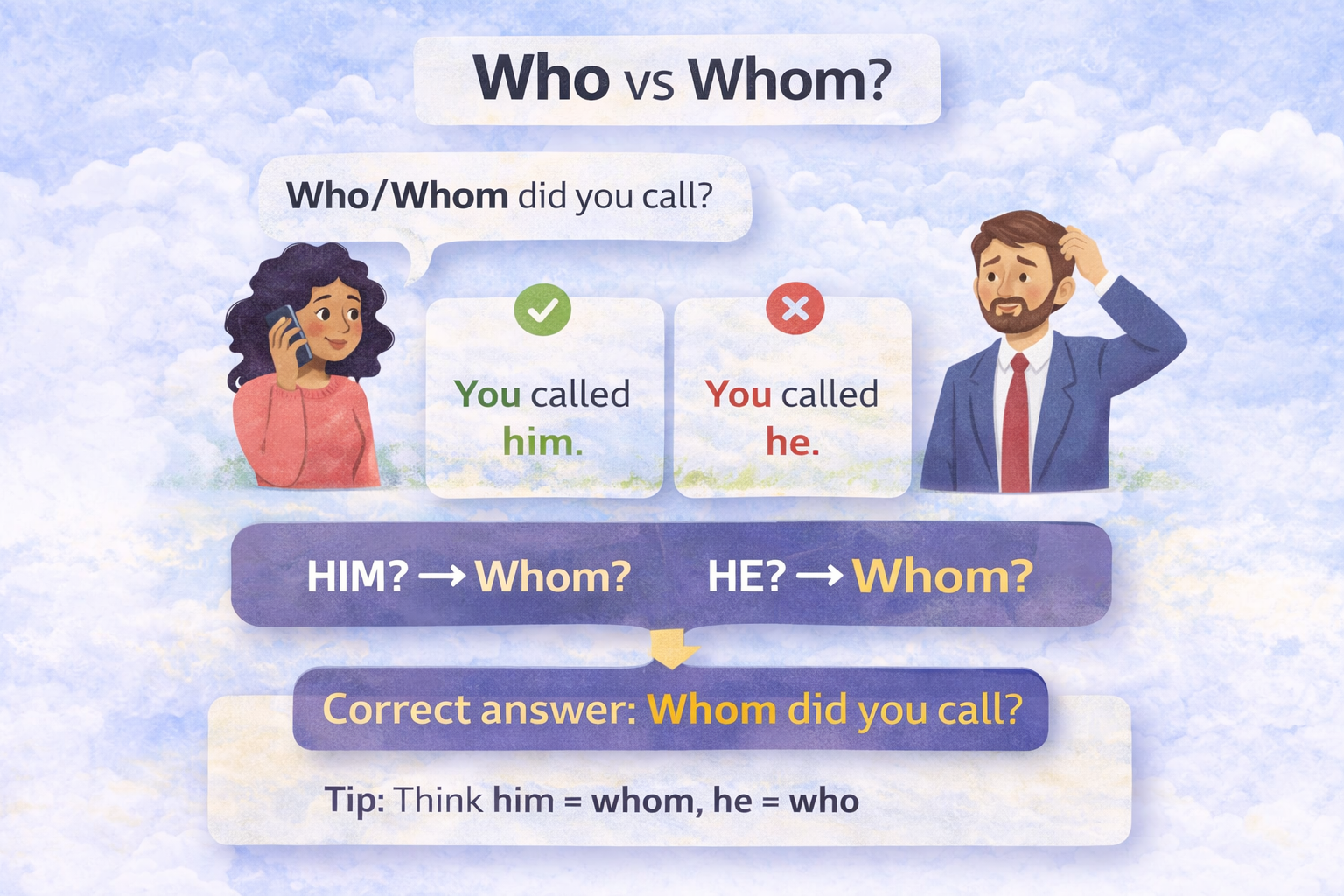
Learn the difference between who vs whom with simple rules and examples. Improve your English grammar and avoid common writing mistakes
Many English learners struggle with who vs whom, and even native speakers often avoid using whom because it seems confusing. However, understanding this grammar rule is easier than you think.
If you want to improve your writing and sound more professional, learning the correct usage of who and whom is essential. In this guide, we will break it down into simple rules with clear examples.
What Does “Who” Mean?
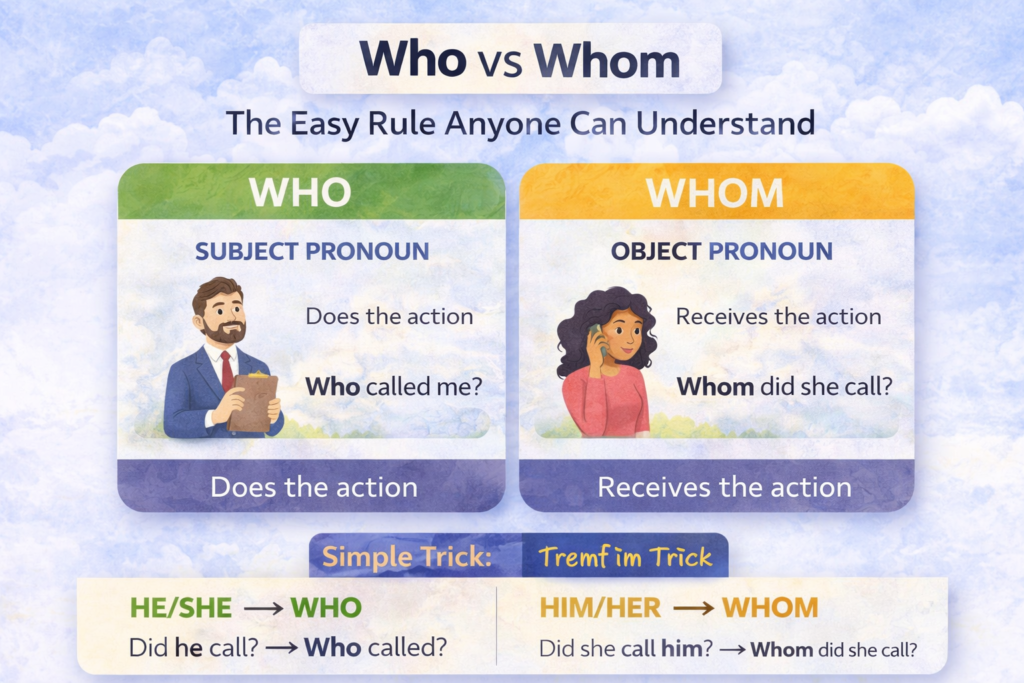
The word who is used as a subject pronoun. It refers to the person who is performing the action in a sentence.
Examples of “Who”
- Who is calling me?
- Who wrote this book?
- She is the person who helped me.
- Who wants to join us?
In these sentences, who is doing the action.
What Does “Whom” Mean?
The word whom is used as an object pronoun. It refers to the person who is receiving the action.
Examples of “Whom”
- Whom did you call?
- To whom should I send the email?
- This is the person whom I met yesterday.
- Whom are you talking about?
Here, whom is receiving the action.
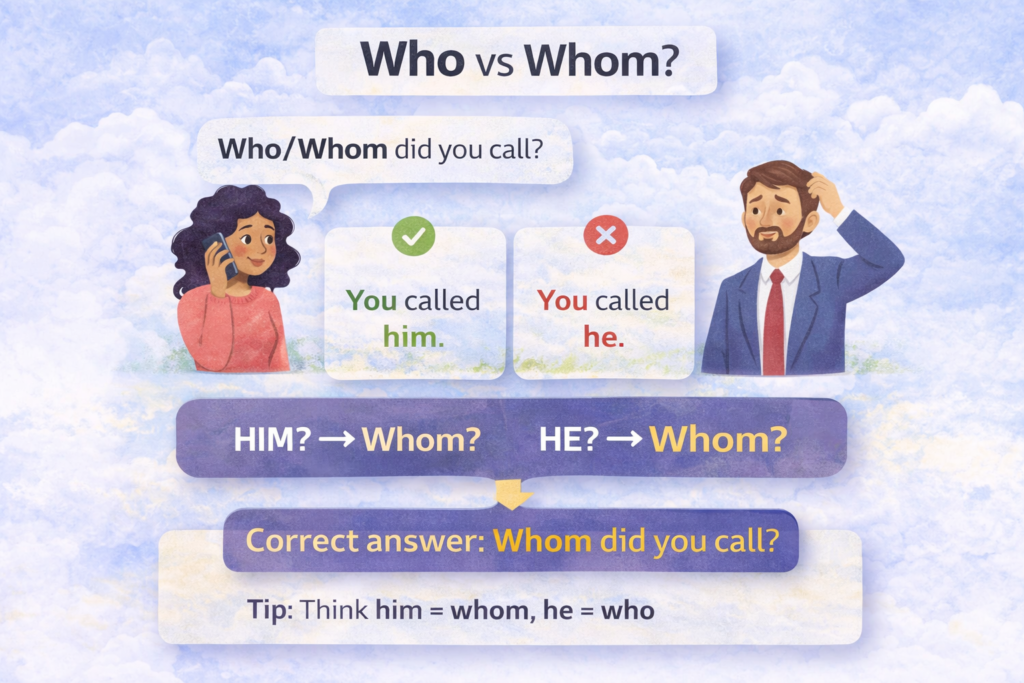
Key Difference Between Who and Whom
| Word | Usage | Example |
|---|---|---|
| Who | Subject (does the action) | Who called you? |
| Whom | Object (receives the action) | Whom did you call? |
Simple Trick to Remember
Here is an easy trick to understand who vs whom:
👉 Replace the word with he/she or him/her
- If he/she fits → use who
- If him/her fits → use whom
Example
Who/Whom did you call?
→ You called him ✔
So the correct answer is: Whom did you call?
Common Mistakes People Make
Many people use who in place of whom, especially in informal writing.
❌ Incorrect:
Who did you meet?
✅ Technically Correct:
Whom did you meet?
However, in modern English, using who is becoming more common in casual conversations.
When Is It Okay to Use “Who” Instead of “Whom”?
In everyday speech, especially in the USA, UK, and Canada, people often use who instead of whom.
Example:
- Who did you call? (Common in conversation)
- Whom did you call? (Formal and grammatically correct)
For professional writing, it’s better to use whom correctly.
Why This Grammar Rule Is Important
Understanding who vs whom helps you:
- Write more professional English
- Improve grammar accuracy
- Avoid common mistakes
- Communicate clearly in formal writing
Even though whom is less commonly used today, it still appears in formal writing, emails, and exams.
FAQ Section
Frequently Asked Questions
What is the difference between who and whom?
Who is used as a subject, while whom is used as an object in a sentence.
Is it okay to use who instead of whom?
Yes, in informal English, but in formal writing, whom should be used correctly.
What is the easiest way to remember who vs whom?
Use the he/him trick:
- He → Who
- Him → Whom
Why is “whom” less common today?
Modern English has simplified grammar, so people often use who instead.
Quick Writing Tip for Who vs Whom
If you are unsure whether to use who or whom, try rewriting the sentence in a simpler way. Break the sentence into two parts and identify the subject and object clearly. This method helps you understand who is performing the action and who is receiving it. In modern English, especially in casual writing, using who is widely accepted, but for formal writing, exams, or professional emails, using whom correctly can make your writing more polished and grammatically accurate. Practicing this rule regularly will help you build confidence and improve your overall English communication skills.
Related Posts
- Its vs It’s – Simple Grammar Rule Most Writers Get Wrong
- Lay vs Lie – Why This Grammar Rule Confuses Everyone
- Fewer vs Less – Common Grammar Mistake Explained
- Me vs I – The Grammar Rule Many People Break

William Henry is a writer for Grammar Max, a blog that focuses on synonyms and phrases. He loves exploring the quirks of the English language and enjoys helping readers improve their vocabulary. William’s articles are easy to read, fun, and full of useful tips for anyone looking to better understand and use English. Whether you’re a student, a professional, or just someone interested in language, William’s writing on Grammar Max makes learning about words and their meanings simple and enjoyable.